
Why Moms Get a Pass for Wine but Not for Cannabis
Wine is treated as a normal way for a mother to unwind. Cannabis, even when it is legal where you live, is still treated as a secret.
Auntie Eida ·
TL;DR
Wine became an accepted mom ritual because it is legal, sold in grocery stores, and branded as a small reward. Cannabis never got that cultural hall pass, so the same evening unwind still draws a lowered voice. Apply the adult rules you already use for alcohol, then drop the extra apology.
Wine already has a public script for mothers who need a break. A glass after the kids are down counts as an ordinary adult choice, even a mildly funny one. Cannabis never got that script. If you use it after bedtime, plenty of other parents do too. The culture around you just has not agreed to treat it as ordinary yet.
The gap is legality, visibility, advertising, and leftover stigma. Wine spent decades in grocery aisles and at dinner. Cannabis spent those same decades as a federal controlled substance, talked about in a whisper, a joke, or a police report. If you want both products to be adult evening choices in your house, you still do social work wine no longer asks for.
Alcohol affects judgment, driving, sleep, and health. Cannabis depends on dose, product, timing, and you. This piece is about social permission, and equal treatment in a house means the same adult rules for both: off duty, no impaired driving, products stored away from children, and no extra apology for an evening choice that stays private.
Why did wine become the approved way for moms to unwind?
Wine had a head start. For adult buyers it has been legal in the United States since national Prohibition ended. It sits on supermarket shelves next to food. For a long time it has been sold as a small reward, a dinner companion, or the end of the workday. Ads and casual talk put a glass in a clean kitchen, on a porch, or at a table with friends. The image is familiar enough that a parent can say they need a glass of wine without a speech about identity.

Cannabis occupied a different legal and cultural lane. Federal law still treats cannabis as a Schedule I controlled substance. Schedule I is the Controlled Substances Act category for substances the federal government classifies as having a high potential for abuse and no currently accepted medical use under federal standards. That status did not vanish because some states created medical or adult-use programs. Possession, sale, and transport can still raise federal issues even when a state-licensed shop is legal under state law. Culture followed the legal split. Advertising followed the culture. Plenty of people still mention a pour of wine more freely than a joint, a vape, or an edible.
You can see the lag in ordinary settings. Wine bottles sit at eye level in grocery stores. People do not usually whisper the word. Cannabis, even from a licensed retailer in an adult-use state, can still carry leftover associations of something people were once expected to hide. That leftover comes from criminalization, workplace rules, housing rules, and decades of public messaging that treated cannabis as a character test.
Cannabis brands sometimes still reach for wine as a comparison because wine is a familiar, less alarming reference for some buyers and some regulators. The shortcut can help. It can also keep cannabis in the role of the edgy substitute instead of an ordinary evening product. Wine-mom humor made parental drinking visible and, in many rooms, socially safe. Cannabis never got an equivalent public joke that made the choice feel boring. Boring is what you want here: an adult product after caregiving is done, without a performance.
National alcohol Prohibition ended in 1933. Wine and other drinks returned to legal commerce and, over time, to everyday retail. Cannabis never got a comparable national reset. The federal scheduling decision in 1970 locked in a category that still shapes banking, interstate commerce, advertising, and the tone of public conversation. State-legal markets exist, and they have changed what adults can buy in those states. They have not rewritten how relatives, employers, or group chats talk about the product. Social norms often move more slowly than state statutes.
A grocery-store presence also matters. When a product sits next to pasta sauce, it is harder to treat as forbidden. When a product is sold behind a licensed counter, with age checks and limited advertising, it can stay socially marked even when it is legal for adults in that state. Parents feel that difference when they decide what they are willing to say out loud.
What does equal treatment look like in your house this week?
Use the rules you already use for alcohol, without adding an extra apology. Wait until you are off duty as the responsible caregiver. Do not drive impaired. Store products the way a careful household already stores liquor: up, away, and out of reach of children. Child-resistant packaging helps, and you still need a high shelf or a lock. Then let the rest of the night be ordinary.
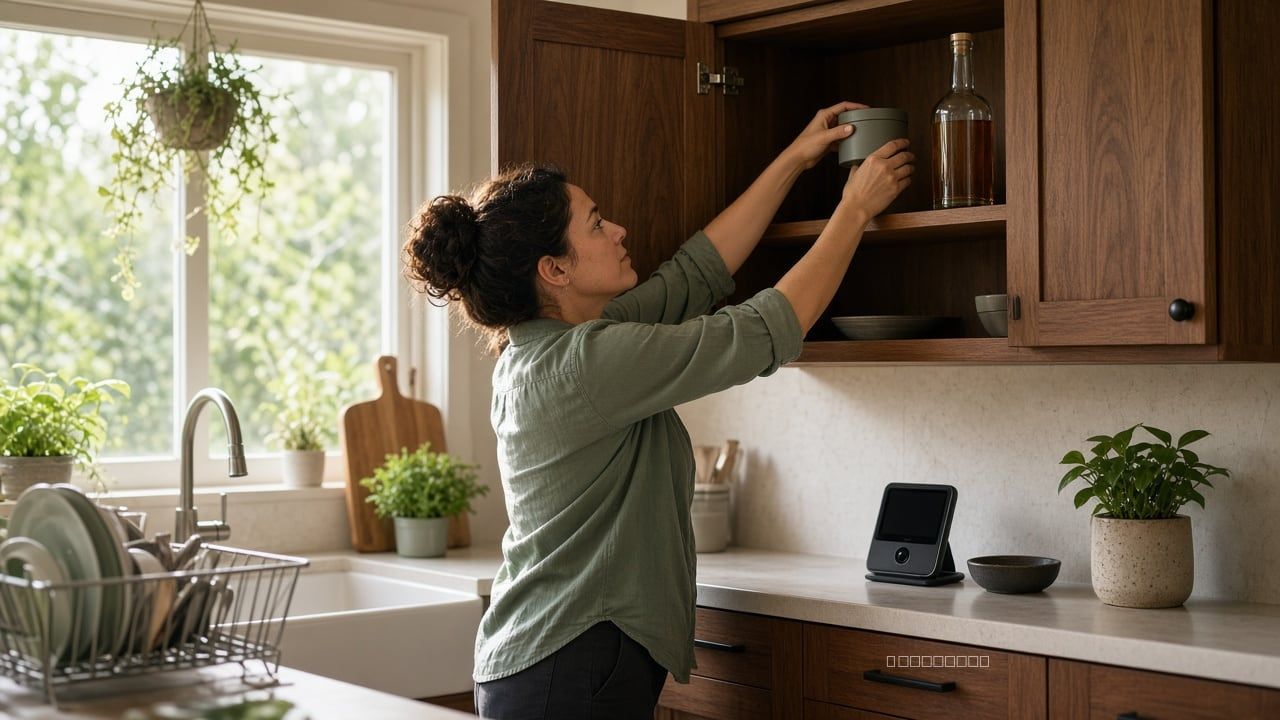
This week, name the choice in the same tone you would use for wine. "I am going to use this after bedtime." Skip the wellness pitch that turns the product into a lifestyle brand. Skip the rebel pitch that turns it into a personality. The wine aisle never asked parents for either story. Ordinary language is enough: what you are using, when you are using it, and who is still on kid duty.
If you live with someone who still treats cannabis as a test of character, keep the conversation on logistics. Timing. Sleep. Who is watching the children. Who has the car keys. Those are the same adult questions households already answer when someone opens a bottle. A clear plan usually lands faster than an argument about identity: you are not driving, the products are stored, and one adult remains fully present if that is what the evening requires.
Storage deserves more attention than slogans. Edibles can look like candy or snacks to a child. Treat them with the same caution you would treat any adult product that is not meant for kids. Keep them in a consistent place, ideally locked or at least well out of reach, not in a purse on a low table or in a nightstand a curious child can open. If you smoke or vape, think about ventilation, odor, and whether anyone in the home has respiratory sensitivities. Secondhand effects and household comfort belong in the same adult calculus people already use for other choices.
Impairment is impairment, regardless of the source. Do not drive. Do not supervise young children while impaired. Decide in advance who is the sober adult when that is needed. Many households already rotate evenings when one parent has a drink. Extending that rotation to cannabis is a scheduling decision. You do not need a debate about whether you are still a good parent.
Sleep and next-morning function are household facts. Some people find that a particular product and dose help them wind down. Others find that timing or strength leaves them groggy. Wine has the same variation. Pay attention to onset time, duration, and how you feel the next day. Inhaled products typically act faster. Edibles take longer to peak, so do not redose quickly. Specific product labels in licensed markets are meant to help with that kind of planning. Use the label. Do not copy a social-media script.
Work, school drop-offs, and overnight responsibility still come first. An evening product is an evening product. If you might need to drive to a pharmacy at midnight or handle an early practice, plan accordingly, the same way you would if you had been drinking. Equal treatment means the same standard of care.
How do you talk about cannabis without making it a personality?
Talk about it the way many people already talk about a drink: when, how much, and whether you are done for the night. A joint, a vape, or an edible does not need to become a brand of motherhood. Wine already received that treatment in popular culture, complete with jokes about "mommy wine time." You do not have to repeat the performance with a different plant. Using something after the kids are asleep can stay a private adult choice.
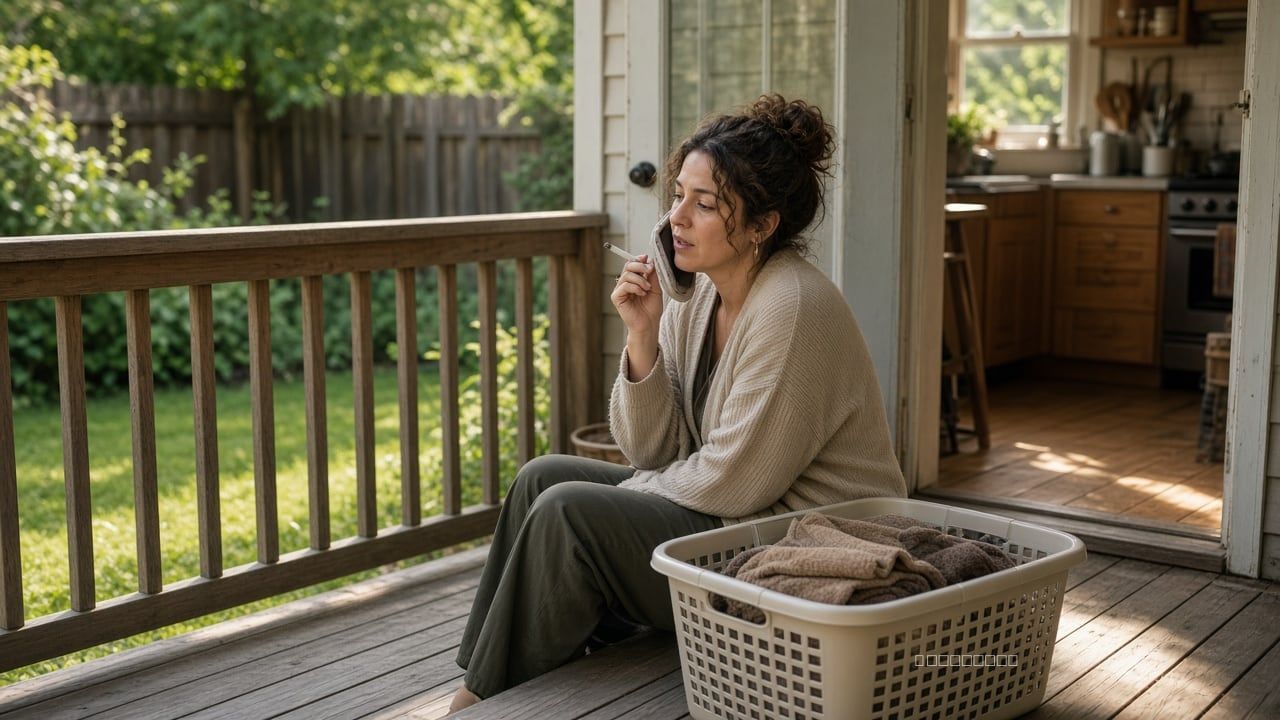
In a group chat, match the room you are actually in. If the thread is among adults who already speak loosely about evening habits, you can name cannabis without a long preamble. If the thread includes people who would treat the topic as a character test, you do not owe the group an announcement. Holding some details back is often just a read of the room, the same way people already decide how much to say about drinking, medication, money, or marital strain.
You can keep an evening choice private and still treat it as legitimate. Practice the same tone, storage, and off-duty timing you already use for alcohol.
If you write copy, run a shop, or talk about products in public, drop wine-mom humor as the only supposedly safe doorway. Assume an adult woman already knows what she wants from an evening product. Write in ordinary language. Treat the product as one evening choice among others, with clear information about ingredients, dose, onset, and storage. Humor that relies on stigma, or on the idea that mothers must be slightly transgressive to deserve a break, keeps the old script in place.
Calm, specific language travels better than clinical language or rebellious language. "This is an evening edible. Onset is slower than inhalation. I use it after the kids are down, and I am not driving" is more useful than a joke about being a bad mom or a saint. Specificity also supports safety. People who know onset times are less likely to take more too soon. People who have already decided they will not drive are less likely to mix the product with a last-minute pickup.
You do not have to convince every relative. You do not have to make cannabis part of your public identity. Licensed adult-use markets, where they exist, changed how some people buy tested, labeled products. They did not rewrite every workplace policy, every family dinner, or every group text. You can still run a household on ordinary adult rules while that slower cultural catch-up continues.
The useful standard is boring. Kids are asleep. One adult choice has been made without a speech. Products are stored like other adult products. Tomorrow's responsibilities are still intact. Wine was allowed to become that kind of boring. Cannabis is still waiting for the same permission in many rooms. You do not have to wait for the culture to finish catching up before you apply the rules you already know: off duty, no impaired driving, locked or out-of-reach storage, and conversation focused on logistics rather than on proving you deserve a break.
FAQ
Why is wine more accepted for moms than cannabis?
Wine is legal, sold in grocery stores, and has been marketed to women as a small reward for decades. Cannabis remains illegal under U.S. federal law even when a state has legalized it, so the social script never caught up.
Does using cannabis after bedtime make someone a bad parent?
Parenting is the care you give while you are on duty. Judge the evening ritual by timing, storage, and whether anyone needs to drive, the same way you already judge a drink. This is a culture piece, not medical or legal advice about your household.
How should I store cannabis in a house with children?
Use the same habits you already use for liquor. Keep it sealed, up high, and out of reach. Do not treat it as a joke or a prop in front of kids.
How do I mention cannabis without turning it into a whole identity?
Use the same plain sentence you would use for wine: when you plan to use it and whether you are off duty. You do not need a wellness speech or a rebel speech. Privacy is allowed when the room is not safe.