How to Make Cannabutter and Cannabis-Infused Oils
A kitchen guide to infusing butter, coconut oil, olive oil, and MCT with decarboxylated cannabis, then straining and cooking with the fat.
Auntie Eida ·
TL;DR
Cannabutter and cannabis oils are fats that have taken up decarboxylated cannabinoids over low heat. Choose the fat that matches the dish, keep the mixture below a boil, then strain, label, and portion it, because a home jar is not lab-tested. Cook a new batch into food you already know, at a fraction of your usual butter or oil, before you serve it to anyone else.
Grind decarboxylated flower, warm it in butter or oil, strain it, then cook with that fat. Stay well below a boil. Use the fat you already reach for when you bake or sauté.
Homemade infusions change with the flower, the fat, the pot, and how closely you watch the heat. Label the jar so you can portion it. Don't expect a saucepan to match a packaged edible.
What do you need before you start an infusion?
Start with decarboxylated cannabis. Raw flower holds cannabinoids mostly as acidic precursors. Dry heat converts those acids into the forms you want in finished edibles. Skip that step and flavor still moves into the fat, but the result stays milder and harder to predict. Do the dry-heat step first, before butter or oil ever touches the plant.
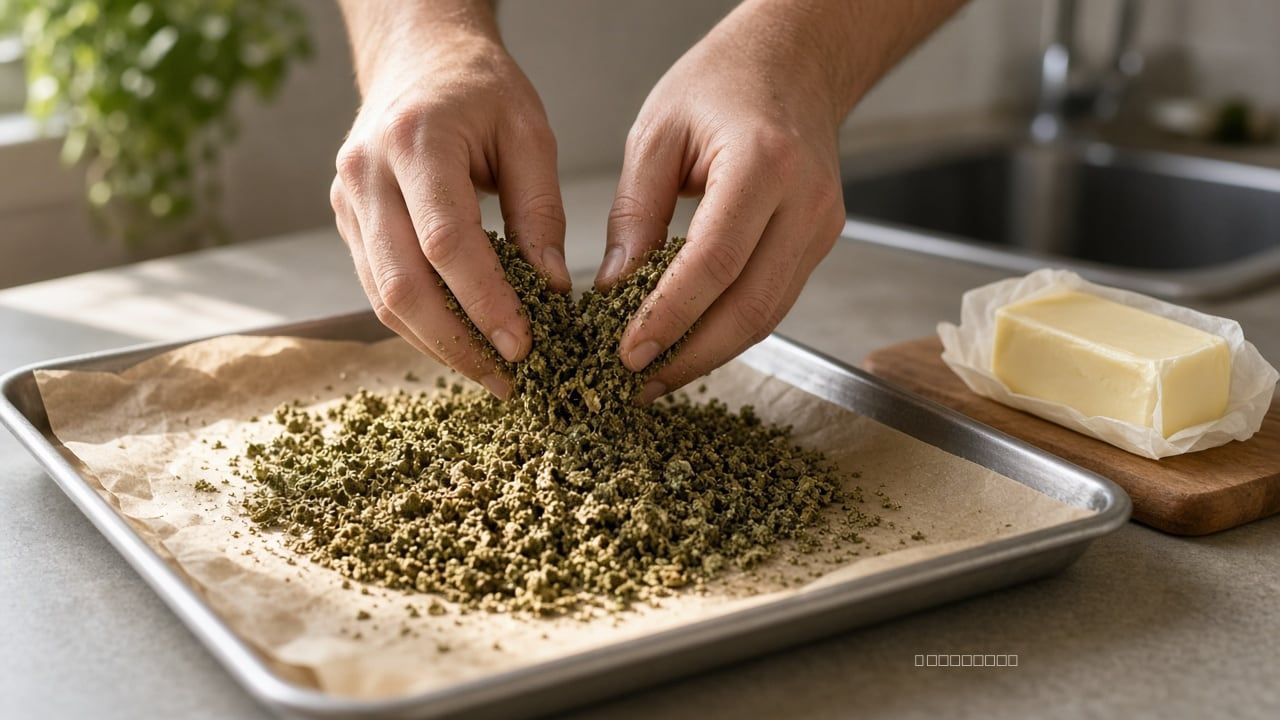
Use flower you already know. The infusion takes on whatever you put in. A heavy, sleepy jar will not taste or feel like a bright, citrusy one. Sugar leaves taste greener than well-cured buds, and that difference shows up in cookies, sauces, and pan drippings. Grind coarse, closer to loose-leaf tea than espresso. A fine powder packs the cloth, clogs the strain, and leaves the butter sandy or speckled.
You need a fat, a heat source you can keep low, and a way to strain. Cheesecloth, a fine-mesh sieve, or a nut-milk bag all work. A kitchen thermometer helps if you have one, because color is a late warning that something has gone too far. A lid holds aroma in the pot so the project does not fill every room. In a small apartment, that lid is as practical as any specialty tool.
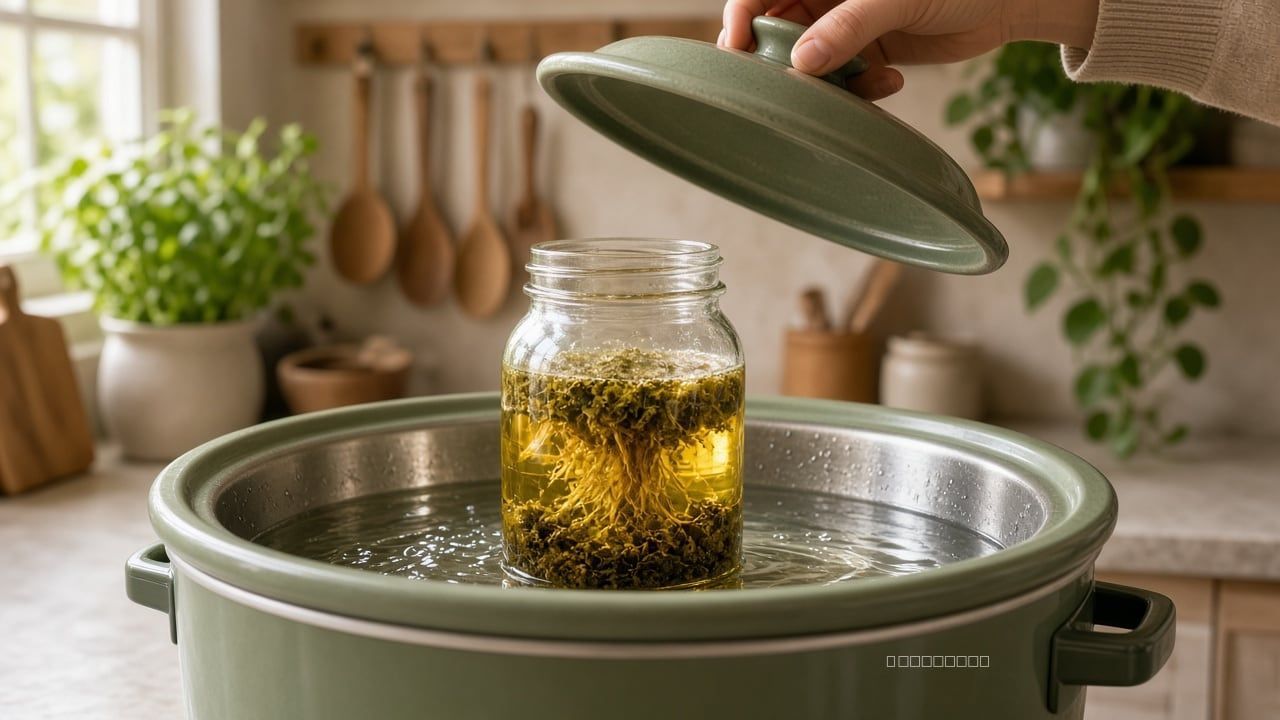
Optional tools make the work easier if you already have them. A slow cooker reduces hot spots compared with a thin saucepan on a cranky burner. A mason jar standing in a water bath keeps plant matter off direct metal. Some home cooks stir in sunflower lecithin, hoping the infusion mixes more evenly into batters and dressings. You can skip all of it and still make a usable jar.
Kief and hash infuse too. They are more concentrated, so use less material and expect less bulk to strain. The fat still wants time and low heat. Trim infuses as well, and it usually tastes more like the plant. Put good flower in food you care about. Save trim for a strongly spiced dish where a greener note will not dominate.
Work only where adult-use or medical rules allow it, for adults only, and treat the finished fat as a controlled ingredient. Label it the moment it cools. Ordinary butter and infused butter look the same in a dish. A roommate grabbing the wrong stick is a real kitchen failure, and so is a guest who did not ask for an edible.
Keep pets away from the pot, the strainer, and the finished jar. Animals do not read labels, and infused fat smells like food. Same caution for children. If your household is mixed, a marked bag in the freezer is safer than an unmarked crock in the fridge door.
Which fats work for cannabutter and canna oil?
Cannabinoids dissolve in fat, which is why you infuse butter and oil rather than broth or water.
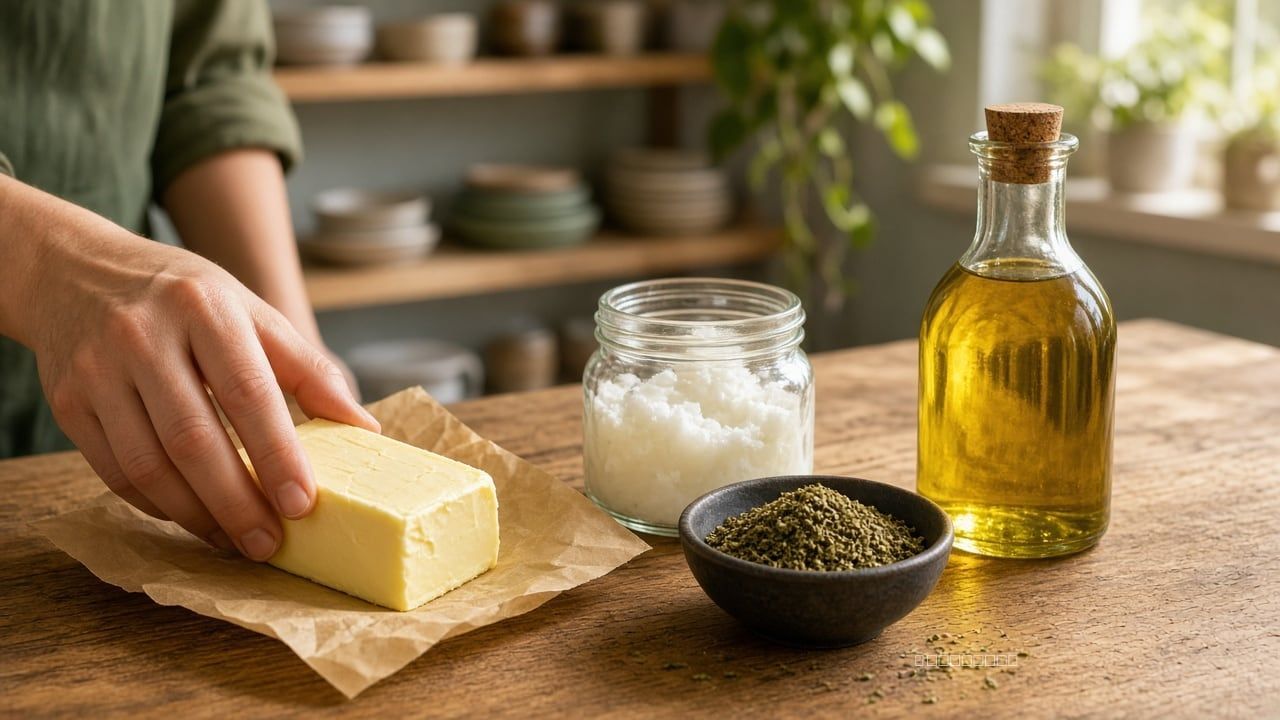
The fat you will actually cook with is the right one. Match fat to recipe. Ignore kitchen folklore about a single correct oil.
Unsalted butter is the classic for baking. It creams into sugar, it browns in a pan, and it tastes like home cooking. Add water to the saucepan so the milk solids are less likely to scorch during a long, gentle infusion. You can cook that water off later, or lift the solid butter off the liquid after a chill. Salted butter works if it is what you have. You simply give up some control over salt in the final recipe, which matters more in pastry than in a garlic pan sauce.
Coconut oil is what you use if you skip dairy. Solid when cool, liquid when warm, so it behaves like butter in brownies and like oil in a warm pan. Refined coconut oil tastes quieter than virgin. Use virgin if you want the coconut note in a curry or granola. Use refined if you want the cannabis to be the only extra flavor. Once it is infused, treat it as an ingredient with a real onset delay.
Olive oil stays liquid and belongs in savory food: vinaigrettes, roasted vegetables, garlic bread, a finish on soup. Extra virgin brings its own fruit and pepper. A milder olive oil disappears into pasta. Skip deep-frying with a careful infusion. High, prolonged heat dulls the aroma you spent hours building, and it uses a lot of fat for a result you cannot easily portion.
MCT oil, often made from coconut, stays liquid in a typical pantry. Use it in coffee, capsules, and dressings where you do not want a solid slab of fat. It has little flavor of its own. A small spoonful hides easily in food, which is why you label the jar clearly and keep it away from anyone who did not ask for it.
Ghee and avocado oil have their places. Ghee is butter with the water and milk solids already removed, so some cooks prefer it for a longer, drier infusion and for storage. Avocado oil is quiet and sturdy in a skillet. Animal fats such as duck fat or bacon drippings will take on cannabis as well. They taste like themselves, so use them only in recipes that already want that flavor. Infused bacon fat in a chocolate cake is a different project from infused bacon fat in beans.
A chocolate chip cookie wants butter or coconut oil. A tomato sauce wants olive oil. A morning coffee wants something that pours. If you cook from a commercial kitchen, you already know this. Infusion only makes the fat something you have to portion with more care, because you cannot see the difference on the spoon.
If you bake and sauté from the same jar, you will fight the fat. Keep a baking fat and a savory fat separate if you can. Label both. The extra jar is cheaper than a batch of cookies that taste like salad oil, or a vinaigrette that tastes like browned butter.
How do you infuse cannabis into butter or oil?
Every vessel wants the same thing: low heat, enough time, no boil. Keep the fat fluid and the plant wet with that fat. You are not frying the herb or reducing the pan to a dark, sticky film.
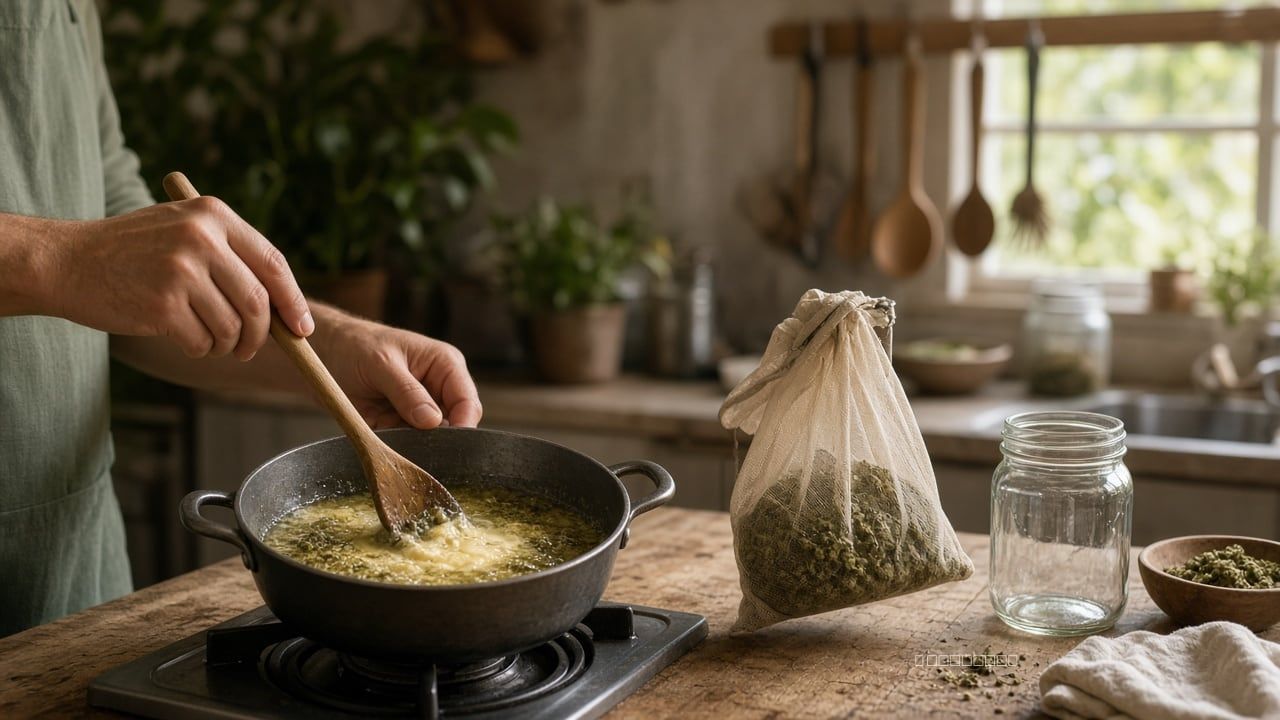
On the stove, combine decarboxylated cannabis with melted butter or warm oil in a saucepan. If you are making butter, add enough water to give the fat a buffer so the pan cannot go dry. Keep the heat at the lowest setting that still keeps the fat fluid. Stir now and then so nothing sticks. Aim for the lazy warmth you would use to melt chocolate, not the heat you use to fry onions. If it simmers, turn it down. A simmer scorches milk solids and drives off aroma.
Stay in the house. A stovetop infusion is not a set-and-walk-away project on a burner that runs hot. Check the bottom of the pan. If you smell toasting, not herbs, the heat is too high. A diffuser plate or a double boiler helps if your burners run hot. Time is measured in hours, not minutes, but a longer stay does not always make a better jar. Confirm now and then that the mixture is warm, fluid, and quiet.
A slow cooker gives you a more even temperament. Put the fat and the cannabis in the crock, or seal them in a mason jar standing in water, and set the cooker to low. Crack the lid if you need to vent moisture from butter. Stir when you walk through the kitchen. Butter can turn grainy if it is held hot for a very long stretch. Oil in a jar is often more forgiving. Be home for it. A cooker on low is still heat you cannot ignore.
An oven infusion works if you can hold a very low temperature. Spread the mixture in a covered oven-safe dish and check it the way you would check a confit: look, smell, stir, put it back. Sous vide, if you already own the gear, is the tidy version of the jar method. Fat and cannabis in a sealed jar, water bath at a controlled low temperature, fewer hot spots, less smell in the room. Buy the tool for other cooking if you want it. Skip it if you do not.
Do not chase a single correct clock. Strain when the fat smells round and herbal, not grassy-raw and not burnt. If you are unsure, stop early and accept a milder infusion. You cannot un-scorch a pan of oil, and you cannot filter a burned taste out of butter.
Ratio is a kitchen choice. More flower in the same amount of fat tends to make a stronger product. More fat tends to make a milder one that is easier to portion into a recipe. Start with a modest amount of cannabis relative to the cup of fat you will actually use. You can always cook a second, stronger batch. Blending with plain fat is the only way to pull strength back out of a jar.
Commercial kitchens chase this same goal with jacketed kettles and logged temperatures. At home you keep it warm, keep it moving, and keep it below a boil. Write down what you used, how you heated it, and how it smelled when you strained. That notebook beats a copied ratio from a stranger's blog.
How do you strain, store, and label the finished fat?
Line a sieve with damp cheesecloth and set it over a heatproof bowl. Pour the warm mixture through. Let gravity do most of the work. Squeeze at the end if you want every drop, knowing that hard wringing also pushes more plant particles and chlorophyll into the fat. For a cleaner butter, patience beats force. A second pass through a clean cloth can help if the first strain looks muddy.
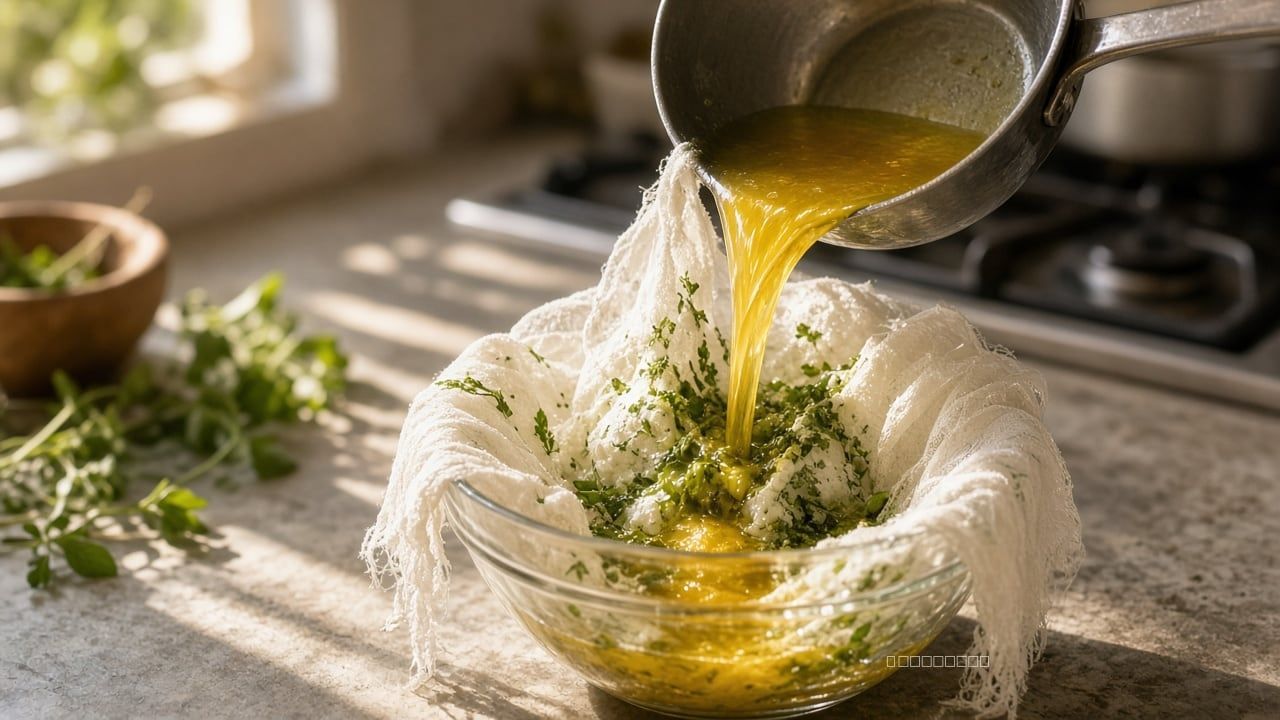
If you used water with butter, chill the strained liquid. The butter will rise and solidify. Lift it off, and discard the water, which will look murky. That step rinses some of the bitter, water-soluble material you do not want in cookies. Pat the butter dry if it is wet on the underside, then pack it into a jar.
Cool the finished fat, then move it into a container that closes tightly. The refrigerator is the default for butter and for coconut oil you will use soon. The freezer is a practical place for extra portions. Ice-cube trays, then a freezer bag, give you something close to a measured knob of fat for a pan sauce or a single bake. Do not store infused fat in an unmarked tub next to ordinary cooking fat.
Write on the lid. Date, fat type, and the cannabis you used, even if that is only mixed house flower. If you know the cultivar, put that too. Homemade infusions are not lab-tested. The label is how you keep future-you from treating garlic bread like a well-known commercial gummy. If several people cook in the kitchen, the label is also how you keep someone else from making that mistake.
Keep infused fats away from pets, children, and guests who did not ask. The product looks like ordinary butter, which is why you cook with it and why you have to watch it. In a shared fridge, a freezer bag with a clear note beats a pretty unmarked crock. If you host, do not put infused butter on the table beside regular butter without a direct conversation.
Smell the jar when you open it later. Butter is perishable. If it smells off, toss it. Infused oil, with less water in it, often keeps longer in the fridge than butter, but it still belongs in a labeled jar, not in an anonymous bottle next to the salad oil. When in doubt, throw it out. A rancid infusion ruins the meal.
How do you cook with cannabutter without guessing the dose?
You will not know the milligrams unless you send the jar to a lab. Plan around that. Weight of flower, strain name, and how it felt last time are notes you keep, not a dose you can calculate.
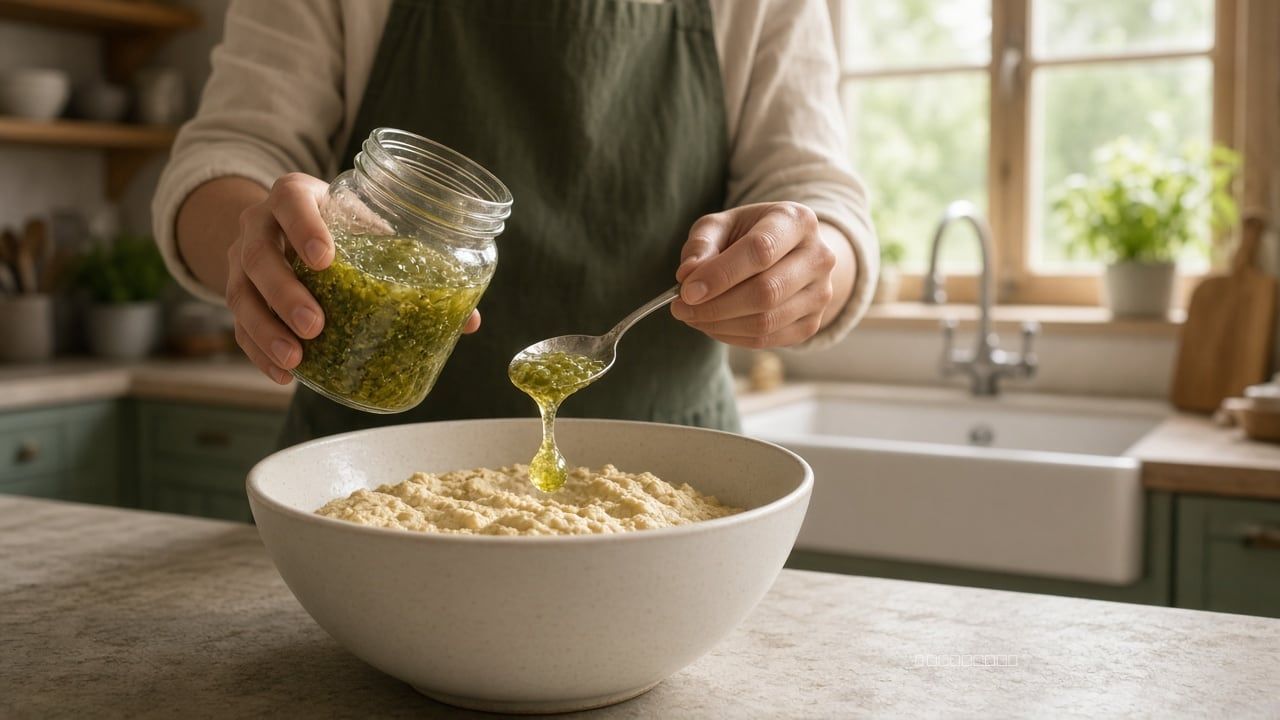
Use less than you think for the first recipe with a new batch. Mix the infusion into a larger amount of plain butter or oil so a single cookie or a single spoon of dressing is a small serving. Eat, wait longer than you would with inhalation, then decide whether the next serving exists. Edibles typically take the long road through digestion. Stacking servings because nothing is happening yet is how a quiet night becomes a long one.
Do not serve a new batch to guests as the first test. Learn it yourself, in a setting where you can sit still. If you cook for another adult who asked for it, tell them it is homemade, untested, and delayed. Let them decide. Never put infused fat into a dish that looks ordinary and then surprise the table.
Match the infusion to the cooking temperature of the dish. Fold cannabutter into frosting, stir canna oil into a vinaigrette, or melt a measured cube into a finished pan sauce off the heat. High, prolonged frying wastes a careful infusion. You spent hours getting cannabinoids into that fat. A screaming skillet is a hard environment for aroma, and it makes portioning even less exact.
Taste is part of the craft. Good flower in clean fat tastes herbal, sometimes peppery, sometimes like toasted tea. Harsh technique tastes like lawn clippings. If a batch is rough, use it in strongly flavored food: chocolate, curry, garlic, ginger, citrus. If a batch is delicate, let it show in a simple shortbread or a piece of toast. Do not waste a clean infusion in a dish that will bury it, and do not expect a grassy infusion to disappear in a mild sugar cookie.
Document what went in. Repeat what worked. Treat infused fat as an ingredient with a real onset delay. You cannot portion it by eye the way you portion salt.
If a recipe already has a lot of butter or oil, replace only part of it with the infusion on the first try. That gives you the texture you already know how to bake or sauté, plus a smaller unknown. If the food is too strong, you can still eat a smaller piece. If the food is too weak, you have learned the batch without committing the whole jar.
A practical first batch
Pick one fat you already cook with. Decarboxylate a small amount of flower you trust. Run a short, low-heat infusion you can strain and freeze in portions. Cook it into something you already know how to make, at a fraction of a normal butter or oil amount, so you learn the batch before you serve it to anyone else.
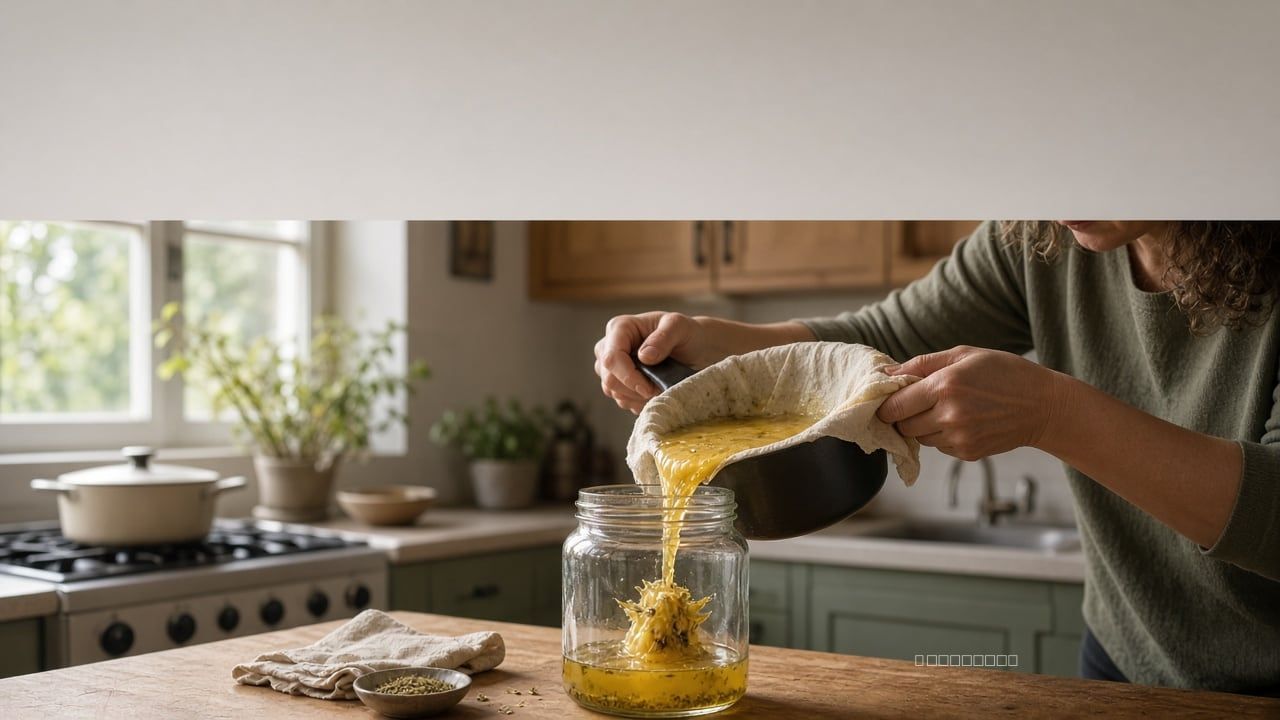
Keep the session small enough that a mistake is a wasted evening, not a wasted week of groceries. Wash the pot, the cloth, and the spoon with hot soapy water when you are done. The smell clings to fabric and wood. Cheesecloth that has been used for infusion does not belong in the regular kitchen drawer.
Write three lines before you put the jar away: what flower, what fat, and what you plan to cook first. That is the quality system a home kitchen can honestly claim. Attention, low heat, and a label someone else can read do the rest.
FAQ
Do you have to decarboxylate cannabis before infusing butter or oil?
Yes if you want THC or CBD in the forms people expect from edibles. Infusion without that dry-heat step mostly moves flavor and the acid forms into the fat. Decarb first, then infuse.
Can you use coconut oil instead of butter?
Yes. Coconut oil is a standard dairy-free stand-in, especially for baking. Use refined coconut oil when you want less coconut flavor, and virgin when that flavor already belongs in the dish.
How should you store homemade cannabutter?
Keep butter in a labeled jar in the fridge and freeze what you will not cook soon. Smell it before you use it, the way you would any homemade flavored butter. Infused oil, with less water, generally keeps longer refrigerated than butter, and still needs a clear label.
Why does homemade cannabutter taste grassy?
Usually a too-fine grind, hard squeezing of the plant matter, trim instead of flower, or heat that climbed into a simmer. Grind coarse, strain gently, and keep the pot below a boil.
Is a slow cooker better than the stove for infusion?
It is easier to keep low and even, which is the whole job. The chemistry is the same. Use whichever vessel lets you avoid a boil and stay close enough to check the pot.