How to Decarb Cannabis Before Cooking With It
A low oven, parchment, and a quiet half hour turn raw flower into cannabis you can cook with.
Auntie Eida ·
TL;DR
Decarb means heating ground cannabis until THCA becomes THC, which is what makes an infusion or an edible work. Spread flower in a thin layer on parchment, bake it low until it looks toasted and feels dry, then cool it before it goes into butter or oil. Do a small batch this week and infuse the same day.
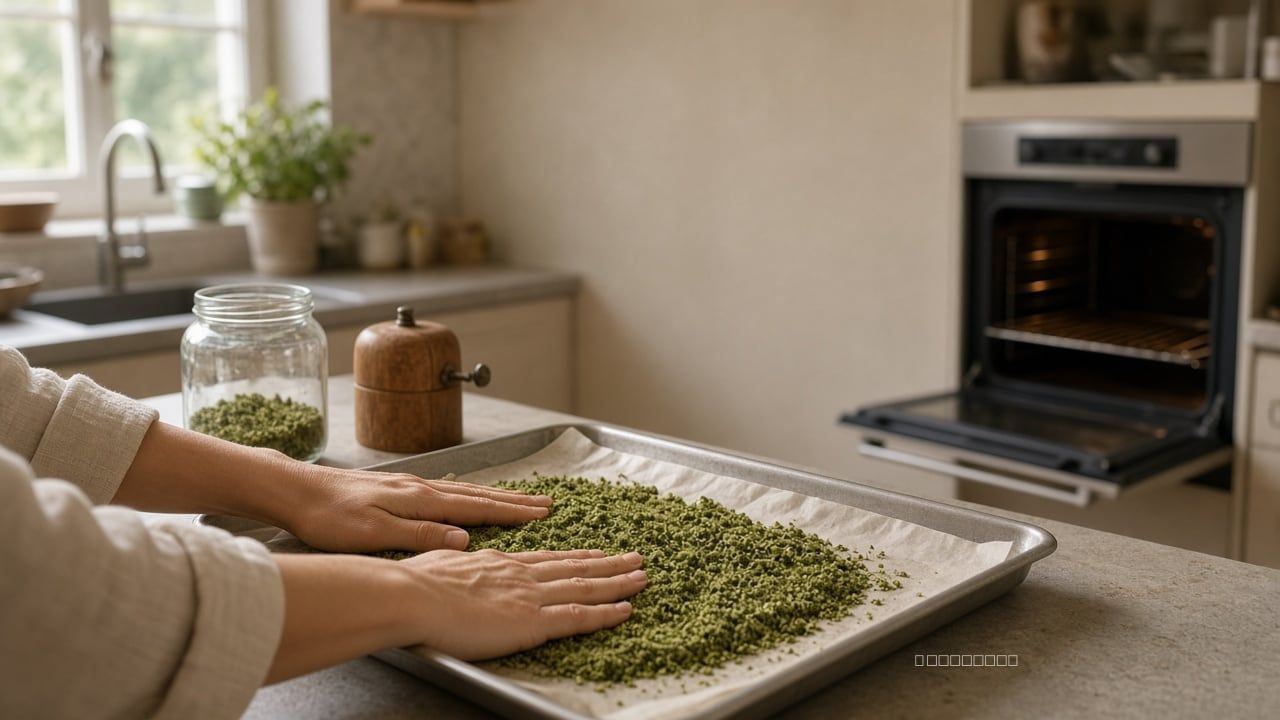
To decarb cannabis before you cook with it, grind the flower coarsely, spread it in a thin layer on parchment, and bake it in a low oven until it looks toasted brown and feels dry and crumbly. Heat converts THCA and CBDA into THC and CBD. Skip the oven and stir raw flower into butter, and you are mostly working with those acid forms. The food will not hit the way a typical infused edible does.
Stay in the kitchen while it bakes. Preheat, then use an oven thermometer if the dial on your stove has ever seemed unreliable. Keep the heat low enough that the cannabis toasts instead of scorching. Stir once at the midpoint so the edges do not darken first. When the tray comes out, let it cool completely on the counter before you mix the flower into fat.
That's the method. Here's the chemistry in plain language, a cautious oven approach for a small weeknight batch, and what to do with the flower the same afternoon. Nothing here is a lab protocol, a dosing chart, or a promise about how strong the food will be.
Why do you have to decarb cannabis before you cook with it?
Dried cannabis flower in a jar is typically rich in THCA. Heat drives a chemical change called decarboxylation: THCA loses a carboxyl group and becomes THC. You use that conversion when you want an edible or an infusion to contain THC. Eat the flower raw and you skip the conversion you get from smoking, vaping, or baking. Bake first, then infuse, if you want decarboxylated cannabinoids in butter, oil, or a recipe.
CBD-dominant flower works the same way, except the acid form is CBDA. If you are cooking a low-THC oil and you want CBD, you still use the oven.
You already know the idea from smoking or vaping, even if you never used the word. A joint or a vaporizer applies much higher heat for a short time. An oven does related work more slowly, on purpose, so you can handle the flower and stir it into food without burning it.
Licensed edible producers, where they operate, use controlled equipment and laboratory testing that a home oven cannot match, so you toast plant material, judge it by look, feel, and smell, and treat the batch as untested.
Raw flower still has a place if you specifically want the acid forms. Some people add it to a smoothie or a salad for that reason. If your goal this week is brownies, a pasta sauce, or a jar of oil, heat the material first.
Don't treat a printed lab number as a kitchen timer. At home you toast until the flower looks and smells done, then use it while it is fresh. Dryness, a light-to-medium brown color, and a nutty roasted smell are the cues you have without instruments. Chase a chart instead of the tray in front of you and you will either under-toast damp crumbs or scorch the edges while waiting for a clock.
Keep the batch tied to a recipe you will actually cook. Decarbing a large amount for later sounds efficient. In practice the aroma fades and the jar sits. Decarb what you plan to infuse this week.
Cannabinoids are fat-soluble, so after a successful toast you usually infuse into butter or oil rather than stirring dry flower into a water-based soup and hoping for even distribution. Toast to convert, then use fat to extract. Mix those two jobs in one pan at high heat and you scorch the plant while the insides stay underdone.
Moisture in the flower also matters. Freshly ground material that still feels damp will steam before it toasts. A thin layer on parchment lets water leave. A pile in a ramekin cooks from the outside in and gives you mixed results in the same spoonful. Whole buds have the same problem: a toasted shell and a grassy interior.
Overheating has a cost even if you never set off the smoke alarm. Too much heat, or too much time at a temperature that is already too high, can push already-formed THC toward further breakdown and a harsher, more bitter taste. Fat will carry that taste into the food. Stay in a low toast range and watch the color instead of blasting the tray.
How do you decarb cannabis in the oven this week?
Set aside time when you can stay in the kitchen. Run a low oven, often around 220-250°F (about 105-120°C), with the flower in a single loose layer. A lot of home cooks set the dial around 240°F, but that is not a laboratory setpoint, and ovens run hot or cold. Preheat. Put an inexpensive oven thermometer on the rack if you have one.
Line a small rimmed baking sheet with parchment. Coarsely grind only enough flower for the recipe you will make the same day, enough to cover the sheet in a single loose layer with space between the crumbs.
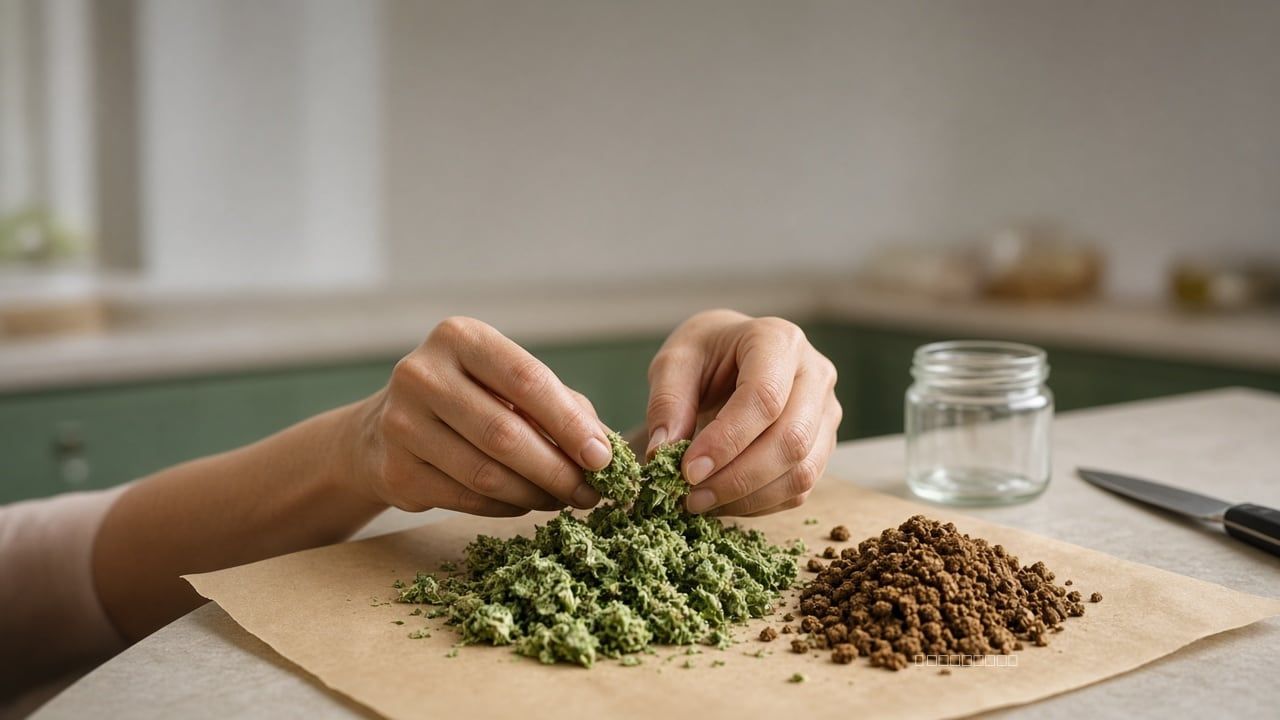
If the grind is as fine as flour, it tends to scorch at the edges and stay damp in the middle. Whole buds lag on the inside. A hand grinder or a knife and a cutting board is enough. You want small, even pieces, not powder.
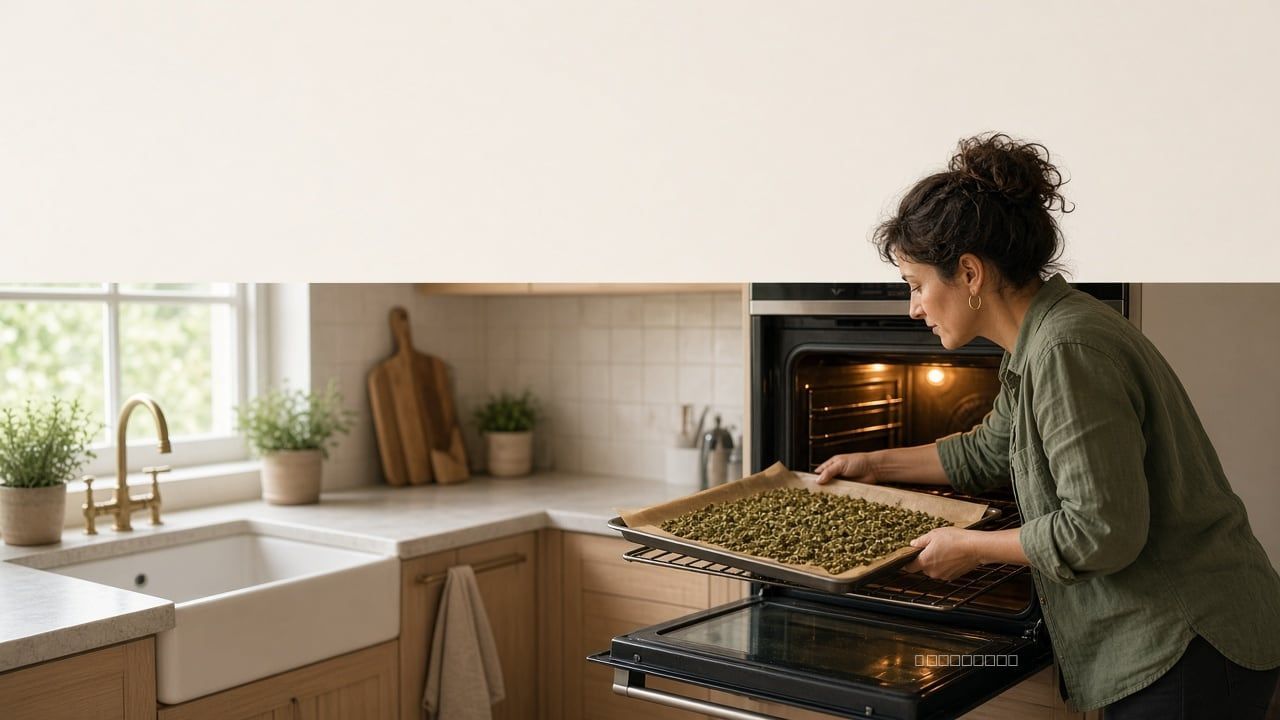
Slide the sheet onto the center rack. Plan on 30-45 minutes total at a low toast temperature, with a stir in the middle so the edges do not race ahead. Try roughly 20 minutes, a stir, then another 15-20 minutes, and watch color more than the clock. Done flower is light to medium brown, dry to the touch, and smelling toasted, nutty, and a little like roasted herbs. If it smells sharp or burnt, you went too far. Pull it based on the tray.
If the thermometer reads hotter than you intended, drop the dial rather than shortening the cook into a guess. If it reads cooler, add a few minutes and keep checking rather than cranking the heat. Covering the tray with foil traps moisture and can steam the flower. Leave it uncovered unless your oven browns from a strong top element and the upper crumbs darken too fast. In that case, a loose foil tent for the second half is enough.
Work with a small batch. A packed sheet cooks unevenly. Two half-full trays in sequence beat one crowded tray. Open a window or run a fan. Decarbing smells like cannabis in a warm oven, which is obvious to anyone in the house and to anyone walking past an open window.
Grind over the parchment so you do not lose kief on the counter. Scrape the grinder. That powder is part of the batch and will brown faster than the rest, which is another reason to stir.
Kief and dry sift have almost no plant bulk, so they brown faster. Use less time, and stir early. A thin dusting on parchment can go from toasted to bitter quickly. If you only have kief, start checking much earlier than you would for ground flower. Look well before the flower timing above, then decide from color and smell.
If you are using trim or small, leafy bits, expect a faster toast and a grassier taste. Flower with visible resin generally takes longer and infuses more cleanly into fat. Either way, stop when it is dry, crumbly, and toasted brown. If it is still green and pliable, give it more time; if it is black and acrid, you went past.
Stay inside the law where you live. This write-up assumes home cooking with cannabis you already possess in a legal market. It is not advice to obtain cannabis, to ignore local rules, or to serve infused food to anyone who did not agree to eat it.
What do you do with the flower once it comes out of the oven?
Set the tray on a cool burner or a rack.
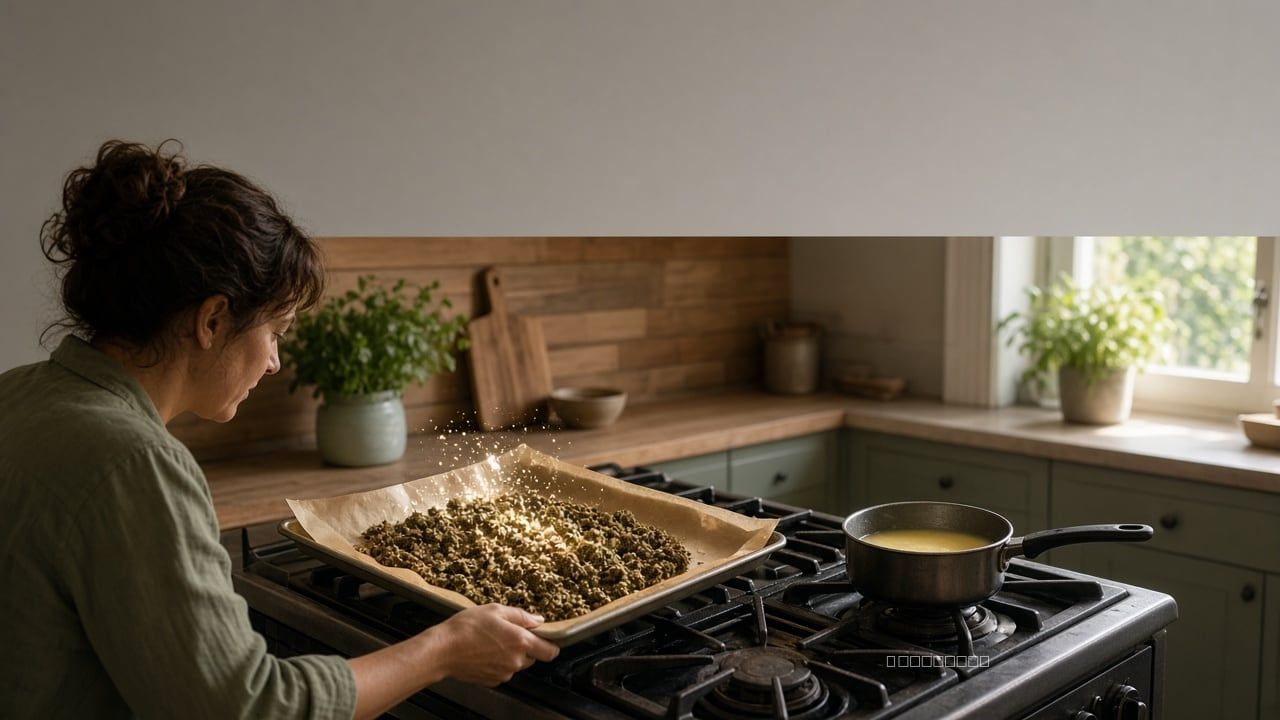
Don't dump hot flower into butter. Residual heat keeps working, and you can overshoot. Give a thin layer several minutes on the counter, often around ten minutes for a thin sheet to stop steaming, until it is fully cool to the touch.
Crumble a pinch between your fingers. It should break, not smear. If it still feels grassy and moist, it can go back in for a few more minutes. If it is dark and harsh, you can still use a smaller amount in a strongly flavored recipe, or start a smaller fresh batch. Scorched flower tastes like scorched flower, and fat will carry that taste.
Once it is cool, infuse the same day into butter or a neutral oil in a double boiler or a slow cooker on low, then strain. You can jar the decarbed flower, label it with the date, and keep it in a cool dark cupboard for a short stretch, but it will not improve in the jar. Plan the infusion while the oven is still warm so you are not storing toasted flower for weeks out of habit.
For the infusion, the flower is already heated. You are extracting into fat, not trying to finish the conversion in a bubbling pan. Use low heat, a longer steep, and enough fat to cover the material. Butter, coconut oil, and a mild olive oil work because cannabinoids dissolve in fat. Strain through cheesecloth. Squeeze. Cool. That jar is what you cook with. Don't boil the fat. A gentle simmer or a double boiler is enough; a rolling boil cooks off aroma and picks up scorched notes.
Dose is personal. The number printed on a legal flower label, if you have one, is a starting point for your own caution, not a promise of what will be in the finished food. Home decarb and home infusion are not a laboratory assay. Potency varies with the plant, how it was stored, the grind, the oven, the fat, the steep, and how hard you squeeze the cloth. Start with less than you think you need when you cook for yourself. Don't serve other people without telling them the food is infused. Write the date and the strain on a piece of tape on the lid.
If you cook in a shared kitchen, keep the jar where it cannot be mistaken for tea or spice. That is courtesy and safety. Keep it away from children and pets. Refrigerate infused butter and oil the way you would other perishable fats, and use your nose and eyes; if it smells off, discard it. Labeling is not optional in a house where more than one person opens the fridge.
A toaster oven can work if it holds a low temperature and you can watch it. The tray sits closer to the element, so stir more often and expect the second half to run shorter. A slow cooker traps steam, so it is a poor tool for the dry toast. Save it for the infusion after the oven.
Some cooks own a dedicated decarboxylation device. If you already have one, follow its temperature setting and keep the batch size inside the cup. You still want toasted, dry, crumbly flower at the end. Look, feel, and smell decide, not a belief that the gadget made the chemistry exact.
Skip the air fryer, the grill, and a dry skillet for this step. Direct high heat scorches the outside before the inside has time to dry and convert evenly. The regular oven is the method you can repeat on a weeknight without babysitting a hot pan.
When the infusion is done, cook with it the way you cook with any flavored fat. Start with a recipe you already know: scrambled eggs, a boxed brownie mix, a pot of soup. You will taste the cannabis. Choose a recipe that can carry a roasted, herbal note rather than a delicate custard you will only fight.
Water-based recipes without enough fat will not extract or carry cannabinoids well, which is why you infuse butter or oil first, then use that fat in the dish. Learn your own tolerance with a spoon of already-infused butter in eggs, not a heap of dry toasted flower in broth.
Clean the sheet, the grinder, and the spatula with hot soapy water before they sit. Resin smears and gets harder to remove as it cools. Parchment can go in the trash. Label the fat, date it, and put it in the refrigerator.
One tray, one jar of oil or butter, one meal you meant to cook anyway, is enough work for the week. Do not scale up until you know how your oven behaves and how the finished food sits with you. Home cooking with cannabis is still cooking: low heat, attention, small batches, and no claims the pan cannot keep.
FAQ
How long should you decarb cannabis in the oven?
Plan on about 35 to 40 minutes at 240 F, with a stir at the midpoint. Watch color and dryness more than the timer. The flower is done when it is toasted brown, dry, and crumbly.
Should you grind cannabis before or after you decarb it?
Grind first, and keep it coarse. Whole buds convert unevenly. Powder scorches. A loose, even layer on parchment is the point.
Does decarboxylated cannabis smell?
Yes. It smells like cannabis in a warm oven. Open a window, run a fan, and pick a time when that is acceptable in your house.
Can you cook with already-vaped cannabis instead of decarbing fresh flower?
Already-vaped flower has been heated, so some people cook with it. Potency is uncertain and the taste is harsh. For a recipe you care about, start with fresh flower and decarb it on purpose.
How should you store decarbed cannabis?
Cool it fully, then jar it with the date and strain on the lid. Keep it in a cool, dark cupboard for a short stretch, and infuse it as soon as you can. It will not improve in the jar.